Topic · Digital money for HR: the glossary
Digital money for HR: the glossary (60 terms)
In short
This glossary explains 60 terms that HR, finance and compliance teams meet when their company starts working with stablecoins, tokens and AI. Each term has a one-sentence definition and one sentence on why it matters for HR, with a link to the guide that covers it in depth. Terms follow the wording of the rules where one exists: MiCA in the EU, the GENIUS Act in the US, the UAE Central Bank’s payment token rules, the EU Pay Transparency Directive, Spain’s Real Decreto-ley 39/2026 and the EU AI Act. Where countries use different words for the same thing, such as payment stablecoin, e-money token and payment token, the entries say so. The full list is also available as open data.
Is your HR team ready for digital money, pay transparency and AI? The 10 questions to answer before 2027, with a free readiness check. The CHRO’s digital-money playbook
What if adoption stalls, AI hollows out the roles or the rules split? Three scenarios, the signals to watch and what HR should do in each. What could go wrong with digital money
Key facts
- Terms
- 60, in five groups: money and tokens; issuing and running a stablecoin; rules and regulators; the technology; pay and people
- Each entry
- A plain definition, why it matters for HR, and a link to the guide that covers it
- Same thing, three names
- Payment stablecoin (US, GENIUS Act), e-money token (EU, MiCA) and payment token (UAE Central Bank)
- Open data
- The full glossary as a CSV file, free to reuse with credit: /data/digital-money-hr-glossary-2026.csv
- Checked
- Dates and legal terms checked on 22 November 2026 against the sources in the series guides
Digital money for HR: the glossary
The 60 terms
Money and tokens · Issuing and running a stablecoin · Rules and regulators · The technology, in plain words · Pay and people
Money and tokens
- Stablecoin
- A digital token designed to keep a stable value against a currency, usually the US dollar, backed by reserves. For HR: It is the asset behind most “pay in crypto” questions, and its stability depends on its reserves and its issuer. Read more: Stablecoins
- Payment stablecoin
- The US legal term, under the GENIUS Act, for a stablecoin used for payments and redeemable for a fixed amount of money. For HR: From the Act’s effective date (by 18 January 2027) only permitted issuers may issue them in the US; from 18 July 2028 platforms may generally offer only those from permitted or qualifying foreign issuers. Read more: Paying salaries in stablecoins
- E-money token (EMT)
- The EU legal term, under MiCA, for a crypto-asset that keeps its value by referring to one official currency. For HR: Euro and dollar stablecoins offered in the EU fall into this category, with their own licensing rules. Read more: Bank stablecoins
- Payment token
- The UAE Central Bank’s term for a stablecoin used for payments. For HR: Under the Central Bank’s rules, a dirham payment token from a licensed issuer may be used for any lawful payment. Read more: Stablecoins in the UAE
- Dirham stablecoin
- A payment token pegged to the UAE dirham and approved by the Central Bank, such as AE Coin, which received in-principle approval in October 2024. For HR: It is the only kind of stablecoin that may be used for general payments in the UAE; salaries still go through the Wage Protection System. Read more: Stablecoins in the UAE
- Tokenised deposit
- A bank deposit recorded as a token on a blockchain. It remains a deposit of the bank. For HR: It is likely to be how many banks offer digital money, under deposit rules rather than stablecoin rules. Read more: Bank stablecoins
- CBDC (central bank digital currency)
- Digital money issued by a central bank itself, such as the planned digital euro or the Digital Dirham. For HR: It is public money, not a private token, and its rules on limits and privacy differ from those of stablecoins. Read more: The Gulf’s chance: digital-money talent
- Digital euro
- The European Central Bank’s planned digital currency for the euro area. Its legal basis was still being negotiated in November 2026. For HR: If adopted, it would be a new way for staff to receive and spend euros. Read more: Stablecoins
- Digital Dirham
- The UAE Central Bank’s digital currency project, moving into wider use with banks. For HR: It is part of the UAE’s push to build local digital-money skills. Read more: The Gulf’s chance: digital-money talent
- Crypto-asset
- The general EU term for a digital value or right that can be transferred and stored on a distributed ledger. For HR: It is the umbrella under which MiCA sets licences and conduct rules. Read more: Stablecoins
- Virtual asset
- The term used by the FATF and in the UAE for a digital value that can be traded or transferred. In Dubai, outside the DIFC, VARA regulates them. For HR: In the UAE, a foreign stablecoin such as USDC may be used only to buy virtual assets. Read more: Stablecoins in the UAE
- Token
- A unit recorded on a blockchain that represents value or a right. For HR: Token grants to staff are a form of pay. Read more: Token compensation
- Tokenisation
- Recording ownership of an asset, such as a bond, a fund share or a deposit, as tokens on a blockchain. For HR: It creates new roles in issuance, custody and operations inside banks. Read more: Jobs in digital money
- Peg
- The fixed value a stablecoin aims to hold, such as one token for one dollar. For HR: If the peg breaks, pay held in that token loses value. Read more: Stablecoin pay and FX risk
- De-peg
- When a stablecoin’s market price moves away from its peg. For HR: It is the risk employees carry if part of their pay is held in a stablecoin. Read more: Risk judgement in digital money
Issuing and running a stablecoin
- Issuer
- The company that creates and redeems a stablecoin and holds its reserves. For HR: It is a regulated firm that must name people for reserves, compliance and risk. Read more: Who owns the stablecoin?
- Reserves
- The cash and short-term government debt that back a stablecoin. For HR: Managing them is a core treasury role in any issuer. Read more: Risk judgement in digital money
- Redemption
- Exchanging stablecoins back for money at the issuer, at face value. For HR: Redemptions can come at any hour, which drives on-call and weekend shifts. Read more: Who owns the stablecoin?
- Redemption run
- Many holders redeeming at once because they fear the issuer cannot pay. For HR: It is the crisis that experienced risk people are hired to prevent and to handle. Read more: Risk judgement in digital money
- Attestation
- A regular report by an accounting firm confirming the reserves at a point in time. For HR: It is evidence work for finance and audit teams, and it is not the same as a full audit. Read more: Risk judgement in digital money
- Custody
- Keeping reserves or tokens safe on behalf of others. For HR: Custody roles need both bank discipline and technical key-management skills. Read more: Jobs in digital money
- Mint and burn
- Creating new tokens when money comes in (mint) and destroying them when money goes out (burn). For HR: They are core operations tasks in an issuer. Read more: Who owns the stablecoin?
- Multi-issuance
- One stablecoin issued by related companies in several jurisdictions, with all the tokens treated as interchangeable. For HR: If it is allowed, one team can serve several markets; if not, teams split by country. Read more: What could go wrong with digital money
- Comparable regime
- Under the GENIUS Act, a foreign country whose rules the US Treasury judges comparable, which lets its issuers into the US. For HR: It decides whether a global team can serve US users. Read more: What could go wrong with digital money
- Equivalence
- The EU’s way of recognising another country’s rules as equivalent to its own. For HR: Like comparability in the US, it decides whether one team can serve several markets. Read more: What could go wrong with digital money
- Three lines of defence
- The usual bank model of control: the business, then risk and compliance, then internal audit. For HR: A token business needs all three staffed, with clear reporting lines. Read more: Who owns the stablecoin?
Rules and regulators
- MiCA
- The EU Markets in Crypto-Assets Regulation, which licenses stablecoin issuers and crypto service providers across the EU. For HR: It sets who must be named and what skills a licensed firm must show. Read more: Bank stablecoins
- GENIUS Act
- The US federal law for payment stablecoins, enacted on 18 July 2025 and taking effect by 18 January 2027 at the latest. For HR: Licensed US issuers need compliance, reserve and risk staff from day one. Read more: Paying salaries in stablecoins
- CBUAE Payment Token Services Regulation
- The UAE Central Bank’s rules for payment tokens, which took effect in August 2024. For HR: They decide which tokens may be used to pay for goods and services in the UAE. Read more: Stablecoins in the UAE
- VARA
- Dubai’s Virtual Assets Regulatory Authority. For HR: It licenses virtual-asset firms in Dubai, outside the DIFC, and with them a large share of the region’s crypto jobs. Read more: Stablecoins in the UAE
- UK crypto regime
- The UK’s new rules for crypto-assets and stablecoins, which start on 25 October 2027. For HR: UK firms will need FCA authorisation and the people to run regulated activities. Read more: What could go wrong with digital money
- Wage Protection System (WPS)
- The UAE system through which private-sector salaries are paid via banks, exchange houses and financial institutions authorised by the Central Bank. For HR: Any stablecoin pay in the UAE has to fit around it. Read more: How pay works in the UAE
- Pay Transparency Directive
- The EU directive 2023/970 on equal pay and pay information. Member States had to transpose it by 7 June 2026. For HR: It brings pay ranges, gap reports and information rights, and token grants are likely to count as pay. Read more: The CHRO’s digital-money playbook
- Real Decreto-ley 39/2026
- Spain’s decree-law that transposes the Pay Transparency Directive, in force since 19 November 2026. For HR: Job offers must show the starting pay, salary-history questions are banned, and the first gap reports are due before 8 June 2027 for companies with 150 or more staff. Read more: The CHRO’s digital-money playbook
- EU AI Act
- The EU regulation on artificial intelligence. AI used to recruit or evaluate workers is high-risk, with obligations from 2 December 2027. For HR: It requires human oversight and documentation for AI used in hiring and performance reviews. Read more: Measuring people when AI does the work
- Emiratisation
- UAE rules requiring private companies to employ a share of UAE nationals in skilled jobs. For HR: Companies with 50 or more staff must reach 10% by the end of 2026, which shapes hiring in token teams. Read more: The Gulf’s chance: digital-money talent
- Travel Rule
- The FATF rule that information about the sender and the receiver must travel with crypto transfers above a threshold. For HR: It adds compliance work to any payment in tokens. Read more: Jobs in digital money
- AML/CFT
- Anti-money laundering and countering the financing of terrorism. For HR: It is the largest compliance workload in any digital-money business. Read more: Jobs in digital money
- KYC (know your customer)
- Checking who a customer is before doing business with them. For HR: On-chain and off-chain checks need trained analysts. Read more: Jobs in digital money
- Sanctions screening
- Checking transactions and wallets against sanctions lists. For HR: It runs around the clock on chains that never close. Read more: Who owns the stablecoin?
The technology, in plain words
- Blockchain
- A shared record of transactions kept by many computers and very hard to change. For HR: It is the rails; most roles in this glossary are about running money on them safely. Read more: Bitcoin from zero · Lesson 2
- On-chain and off-chain
- Whether an action is recorded on the blockchain (on-chain) or in a company’s own systems (off-chain). For HR: Many new roles sit between the two. Read more: Who owns the stablecoin?
- Wallet
- Software or hardware that holds the keys to tokens. For HR: Employees paid in tokens need a wallet and must know how to keep it safe. Read more: Bitcoin from zero · Lesson 3
- Private key
- The secret that controls a wallet; whoever has it controls the tokens. For HR: Key management is a scarce, high-risk skill. Read more: Bitcoin from zero · Lesson 4
- Seed phrase
- A list of words that can restore a wallet’s private keys. For HR: It is a must-teach item in any staff financial-literacy programme. Read more: Bitcoin from zero · Lesson 3
- Smart contract
- Code on a blockchain that runs automatically when its conditions are met. For HR: Smart-contract risk needs specialist reviewers. Read more: Jobs in digital money
- Gas fee
- The fee paid to a blockchain network to process a transaction. For HR: It is a cost to include when comparing token pay with bank transfers. Read more: Bitcoin from zero · Lesson 2
- Chain (network)
- A specific blockchain, such as Ethereum or Solana. The same stablecoin can exist on several chains. For HR: Sending tokens on the wrong chain can lose them. Read more: Bitcoin from zero · Lesson 2
- 24/7 settlement
- Payments that settle at any hour, every day, because blockchains never close. For HR: It changes shift patterns, on-call pay and working-time policy. Read more: Who owns the stablecoin?
- AI agent
- Software that can take actions on its own, such as making payments or answering customers. For HR: It needs a named human owner who is accountable for what it does. Read more: The CHRO’s digital-money playbook
Pay and people
- Token grant
- A grant of tokens to an employee as part of pay. For HR: It is taxed and valued differently from salary, and it is likely to count as pay under the EU Pay Transparency Directive. Read more: Token compensation
- Vesting
- The schedule over which granted tokens or shares become the employee’s. For HR: It is the main retention tool in token pay. Read more: Token compensation
- Lock-up
- A period during which tokens cannot be sold, often after they vest. For HR: It affects what an employee can actually spend, and when. Read more: Token compensation
- Token-denominated pay
- Pay set or paid in a token rather than in the local currency. For HR: The employee carries the price and exchange-rate risk. Read more: Salary in crypto
- Stablecoin payroll
- Paying salaries, or part of them, in stablecoins, usually through a provider that converts money into tokens. For HR: It is allowed in some countries and restricted in others, and it is usually best offered as a voluntary conversion. Read more: Paying salaries in stablecoins
- FX risk (exchange-rate risk)
- The risk that the value of pay changes because the currency it is paid in moves. For HR: A dollar stablecoin carries dollar risk for anyone who spends in another currency. Read more: Stablecoin pay and FX risk
- Job architecture
- The structure of job families and levels a company uses to organise roles and pay. For HR: Naming digital-money roles in families and levels comes before pricing them. Read more: Jobs in digital money
- Pay range
- The minimum to maximum pay for a role or level. For HR: It is the basis of pay transparency, and some places require pay information in job offers. Read more: The CHRO’s digital-money playbook
- Gender pay gap report
- A report comparing the average pay of women and men, required under the EU Pay Transparency Directive. For HR: In Spain, the first one is due before 8 June 2027 for companies with 150 or more staff, and it should include token grants. Read more: The CHRO’s digital-money playbook
Open data: the 60 terms and the job map are free to reuse (CC BY 4.0) as CSV and JSON on Zenodo (DOI 10.5281/zenodo.24456615), Hugging Face and GitHub.
How to use it
Each term has its own link, so you can send a colleague straight to one definition: add # and the term’s name to the address, for example /topics/digital-money-glossary/#multi-issuance.
The glossary explains words; it does not give legal or tax advice. Rules differ by country and change, so check the current rules with your advisers before acting. The views in this glossary are Borja’s own and do not represent any organisation he belongs to.
Borja’s view
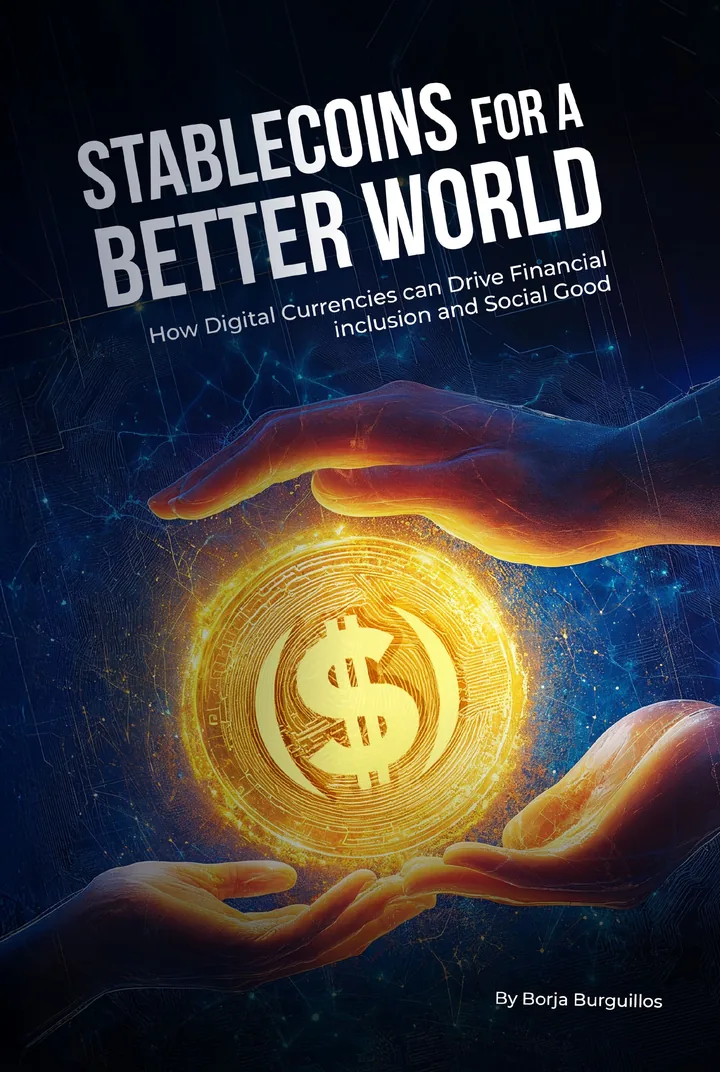
Borja spent about 20 years on people and pay in the Gulf, including as Global Head of Compensation & Benefits at Delta Partners (now FTI Consulting), and wrote Stablecoins for a Better World. His view: most confusion about digital money in HR is a vocabulary problem. Three regulators use three names for the same thing, and the same word can mean a token, a deposit or a central bank currency. An HR team that shares one vocabulary with finance and compliance will make better decisions on pay, hiring and policy, and will make them faster.
Questions
What is the difference between a stablecoin and a CBDC?
A stablecoin is issued by a private company and backed by reserves; a CBDC, such as the planned digital euro or the Digital Dirham, is issued by a central bank itself.
Is a payment stablecoin the same as an e-money token?
Broadly, yes: they are the US and EU legal terms for a stablecoin tied to one currency. The UAE Central Bank calls it a payment token. Each comes with its own licensing rules.
What is multi-issuance?
One stablecoin issued by related companies in several jurisdictions, with all the tokens treated as interchangeable. Whether the EU allows it is still being decided.
Do token grants count as pay?
Under the EU Pay Transparency Directive, pay includes any consideration in cash or in kind, so token grants are likely to count. They are also taxed differently from salary.
Can I reuse this glossary?
Yes. It is free to reuse with a credit and a link, and the full list is available as a CSV file at /data/digital-money-hr-glossary-2026.csv.
Sources
- Regulation (EU) 2023/1114 on markets in crypto-assets (MiCA)
- GENIUS Act, Public Law 119-27 (S.1582)
- Central Bank of the UAE, Payment Token Services Regulation (rulebook)
- Directive (EU) 2023/970 on pay transparency
- BOE, Real Decreto-ley 39/2026 (BOE-A-2026-24121)
- EU AI Act, Annex III
- FATF, Updated guidance on virtual assets and the Travel Rule
- UAE Government portal, Emiratis’ employment in the private sector
Updated: