Topic · Stablecoins
What are stablecoins, and why do they matter?
In short
A stablecoin is a digital token designed to keep a steady value, usually one US dollar, by holding reserves such as cash and short-term government debt. Stablecoins move over blockchains like crypto, but without crypto’s price swings, which makes them useful for payments, for saving in a strong currency and for sending money across borders.
Key facts
- Typical peg
- 1 token = 1 US dollar
- Usual backing
- Cash, bank deposits and short-term government debt
- EU rules
- MiCA stablecoin provisions apply since 30 June 2024
- US rules
- GENIUS Act signed on 18 July 2025; in force by 18 January 2027 at the latest
- Interest
- Issuers may not pay interest to holders under MiCA or the GENIUS Act
Stablecoins
How a stablecoin keeps its value
The issuer creates one token for every dollar it receives and destroys it when the dollar is redeemed. The promise only holds if the reserves are real, liquid and independently checked, which is why reserves and redemption rights are the first thing to look at.
Not every stablecoin works this way. Some are backed by other crypto assets held as collateral, and some tried to hold their value with algorithms alone. The collapse of TerraUSD in May 2022 showed how fragile that last model can be.
Why stablecoins matter beyond crypto
For someone with a good bank account, a digital dollar is a convenience. For a migrant worker sending money home, a family in a country with high inflation or a freelancer paid from abroad, it can mean faster, cheaper access to a stable currency, available on a phone, at any hour.
That is also why stablecoins matter for employers. Paying contractors across borders, offering part of a salary in a digital dollar or settling with suppliers in minutes are no longer theoretical, and each raises questions of tax, labour law and risk that HR and finance teams need to answer.
The rules are here
The EU moved first: the stablecoin rules of MiCA, the Markets in Crypto-Assets Regulation, have applied since 30 June 2024. The United States followed with the GENIUS Act, signed on 18 July 2025, its first federal framework for payment stablecoins. Both require full reserves, give holders redemption rights and ban issuers from paying interest.
Borja’s view
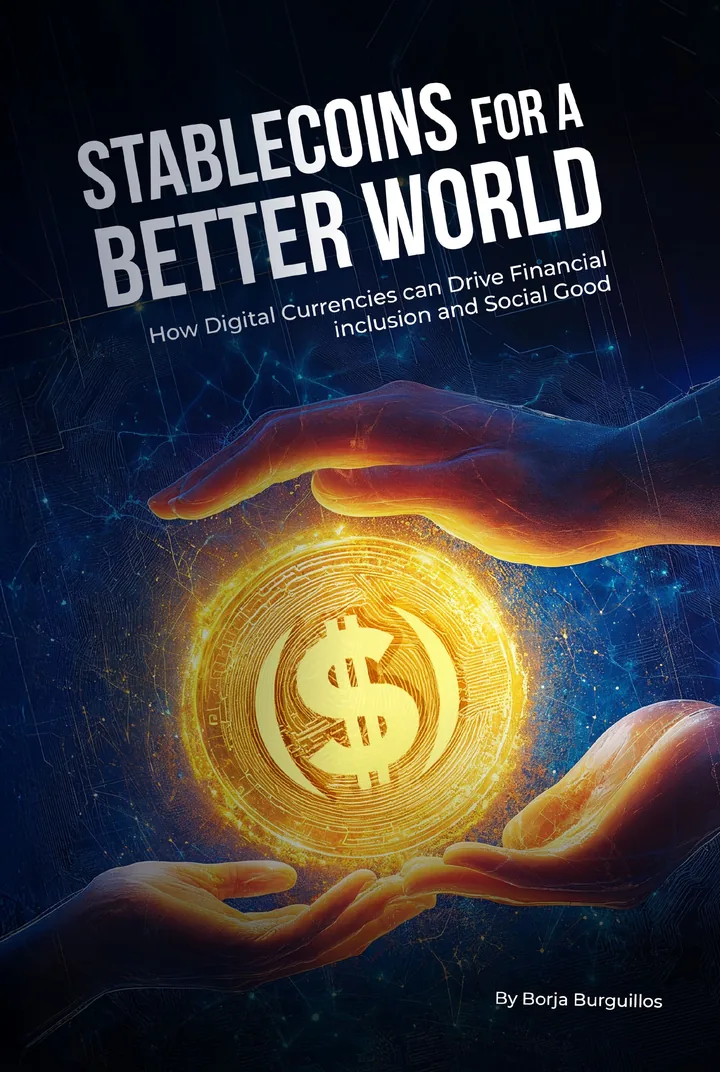
In Stablecoins for a Better World, Borja argues that the most important use of stablecoins is inclusion: giving people outside the banking system the same tools as everyone else. As Co-Chair of the People & Organisation Committee at the Middle East Stablecoin Association, he also works on what stablecoins mean for employers, employees and pay.
Questions
Are stablecoins safe?
As safe as their reserves and their issuer. Look for regular independent checks of the reserves, a clear right to redeem at face value and regulation in a major jurisdiction. Stablecoins without real reserves have failed before.
Do stablecoins pay interest?
Not from the issuer. Both MiCA in the EU and the GENIUS Act in the US ban issuers from paying interest to holders.
What is the difference between a stablecoin and a CBDC?
A central bank digital currency is issued by a central bank. Most stablecoins are issued by private companies and backed by reserves they hold.
What is the difference between a stablecoin and Bitcoin?
Bitcoin’s price floats freely and its supply is fixed. A stablecoin aims for a fixed price, and its supply grows and shrinks with demand.