Topic · Open lists in Spain
Open lists in Spain: how Spaniards vote today, and what would change
In short
For Congress, Spaniards vote for a closed, blocked party list: they cannot choose or reorder the candidates, and a ballot with names crossed out or added is void. The Senate already has open lists: voters mark up to three candidates, from any party. Closed lists are set by the electoral law (LOREG), not by the Constitution, so opening them would mean amending an organic law with an absolute majority in Congress. 20 of the 27 EU countries use some form of preferential vote; Spain is one of the exceptions.
How would the seats split in your province? The free calculator shares them out with the D’Hondt method. Open the D’Hondt calculator
How many voters stand behind each seat in your province? All 52 constituencies, with the official 2026 census. Votes per seat, province by province
Key facts
- Next general election
- 29 November 2026 (campaign from 13 to 27 November)
- Congress
- 350 deputies; 52 constituencies (the 50 provinces plus Ceuta and Melilla); at least 2 per province
- How you vote for Congress
- A closed, blocked party list; seats by the D’Hondt method; 3% threshold
- Senate
- 208 senators elected directly; 4 per mainland province, and voters there mark up to 3 candidates from any party
- Void ballots
- Congress: names crossed out, added or reordered. Senate: more than three names marked
- To change it
- Amend the LOREG, an organic law: absolute majority of Congress (Constitution, art. 81)
- Fixed by the Constitution
- The province as constituency and proportional representation (art. 68)
- In the EU
- 20 of 27 countries use a preferential vote; Spain, France and Germany do not
A worked example: five seats, four parties
Take a province that elects five deputies and four parties with these votes. D’Hondt divides each party’s votes by 1, 2, 3 and so on, and the five highest results win the seats.
Party A wins three seats and Party B two. Party C, with 13% of the votes, wins none: in a small province a party needs a much bigger share than the 3% threshold to win a seat.
| Party | Votes | ÷ 1 | ÷ 2 | ÷ 3 | Seats |
|---|---|---|---|---|---|
| Party A | 100,000 | 100,000 | 50,000 | 33,333 | 3 |
| Party B | 80,000 | 80,000 | 40,000 | 26,667 | 2 |
| Party C | 30,000 | 30,000 | 15,000 | 10,000 | 0 |
| Party D | 20,000 | 20,000 | 10,000 | 6,667 | 0 |
Illustrative figures, not a real result. The five highest quotients are in bold.
Watch: open lists in 70 seconds
Open lists in Spain
How you vote for Congress today
Congress has 350 deputies, elected in 52 constituencies: each of the 50 provinces, plus Ceuta and Melilla. Every province gets at least two seats, Ceuta and Melilla one each, and the rest are shared out by population.
Each party presents a closed, blocked list, with as many candidates as there are seats. You vote for the whole list as it is: you cannot pick a person or change the order. Seats go to parties by the D’Hondt method, with a 3% threshold, and then to the candidates in the order the party chose. Crossing out, adding or reordering names makes the ballot void.
The Senate already has open lists
The Senate works differently. Each mainland province elects four senators, and each voter can mark up to three candidates, from any party. Gran Canaria, Mallorca and Tenerife elect three, with up to two marks; the other islands or island groups elect one each, and Ceuta and Melilla two each. The candidates with the most votes win. On top of the 208 directly elected senators, each regional parliament appoints at least one more, plus one per million inhabitants.
Marking fewer candidates than the maximum is valid. Marking more than three makes the Senate ballot void.
Three ways to run a list
With closed, blocked lists, as in Congress, the party decides who sits. With unblocked lists, or a preferential vote, you vote for a party but can also back one of its candidates, and those personal votes can change the order. With fully open lists, as in the Spanish Senate, you choose people, even from different parties.
Finland is the best-known example of the middle option. Each voter picks one candidate, and the vote counts for both the party and the person. Seats go to parties by the D’Hondt method, and within each party, to the candidates with the most personal votes. In the EU, 20 of the 27 member states use some form of preferential vote; Spain, France and Germany are among those that do not.
What it would take to change
Closed lists are not in the Constitution. The Constitution fixes the province as the constituency and requires proportional representation; how the lists work is set by the electoral law, the LOREG. As an organic law, it can be changed only with an absolute majority in Congress, 176 of the 350 deputies, in a final vote on the whole bill.
The idea has support. In a SocioMétrica poll for El Español in June 2017, 80% of respondents favoured open or unblocked lists and 12% wanted to keep closed ones. In October 2025, the group La Plaza del Círculo, with Jordi Sevilla, Juan Lobato, Manuela Carmena and Ignacio Aguado among its members, listed open lists among its priority reforms.
Borja’s view
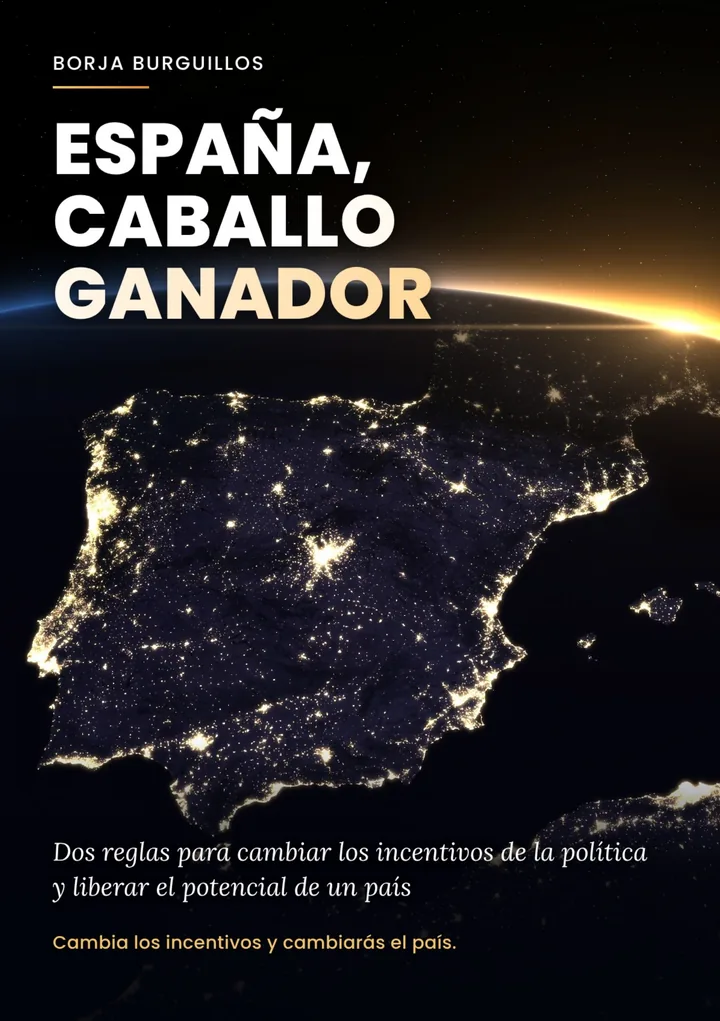
Borja has spent his career on how organisations evaluate and pay people, and his conclusion carries over to politics: people do what the system rewards, not what they are asked. With closed lists, a deputy’s career depends on whoever draws up the list, not on the voters. That is why his next book, España, caballo ganador, proposes Finnish-style open lists and tests the idea with data.
Questions
Are there open lists in Spain?
Yes, for the Senate: voters mark up to three candidates, from any party. Not for Congress, where lists are closed and blocked.
Can I cross out a name on the Congress ballot?
No. A Congress ballot with names crossed out, added or reordered is void.
How many candidates can I mark for the Senate?
Up to three in a mainland province, and up to two in Gran Canaria, Mallorca and Tenerife. Marking fewer is valid; marking more than three makes the vote void.
Does Spain need to change its Constitution to have open lists?
No. Closed lists are set by the electoral law (LOREG). Changing it needs an absolute majority in Congress, 176 of 350 deputies.
Which countries use open or preferential lists?
20 of the 27 EU countries use some form of preferential vote. In Finland, each voter picks one candidate, and within each party the candidates with the most personal votes win the seats.
Sources
- La Moncloa, Constitución española, Título III, artículos 68, 69 y 81
- La Moncloa, Elecciones en España: glosario electoral (5 de octubre de 2026)
- Maldita.es, Cómo se eligen los diputados y senadores en España (13 de junio de 2023)
- Maldita.es, El voto al Senado y el artículo 96 de la LOREG (6 de noviembre de 2026)
- Euronews, Calendario de las elecciones generales del 29N (6 de octubre de 2026)
- Statistics Finland, Parliamentary elections: quality description
- Il Sole 24 Ore, Preferential voting in 20 EU countries (18 July 2026)
- El Español, Los ciudadanos quieren listas abiertas (encuesta SocioMétrica, junio de 2017)
- El Español, Socialistas críticos piden abrir las listas (17 de octubre de 2025)
Updated: