Topic · Stablecoins and remittances
Can stablecoins make sending money home cheaper?
In short
Often, yes, but not always. Sending money home through traditional services costs 6.36% of the amount on average, according to the World Bank. IMF researchers found that a $200 transfer using stablecoins costs about 2.2% on average, and across 33 corridors where they could compare, 1.02% against 5.81% for traditional services. Most of the cost is not the blockchain but getting in and out of the stablecoin. In about a third of those corridors the cheapest traditional provider is still cheaper, and the IMF warns that dollar stablecoins carry risks for weaker currencies.
Key facts
- Remittances to low- and middle-income countries
- US$728.6 billion in 2025; about 220 million migrants support 1.1 billion relatives (IFAD)
- Average cost of sending money
- 6.36% of the amount sent (World Bank)
- Stablecoin transfer of $200
- About 2.2% on average, from −2% to 8% depending on the corridor (IMF)
- Head to head, 33 corridors
- 1.02% by stablecoin against 5.81% by traditional services (IMF researchers)
- Where the stablecoin cost goes
- Exchange fees 0.85 points, bank deposits and withdrawals 0.67, the blockchain transfer 0.48, spreads 0.18
- Adults with no financial account
- 1.3 billion; about 900 million of them own a mobile phone (World Bank, Global Findex 2025)
- Sent from the UAE in 2025
- Dh188.8 billion, up 27.8% (Central Bank of the UAE)
- Share of stablecoins in dollars
- Nearly 99% (IMF)
Stablecoins and remittances
What sending money home costs today
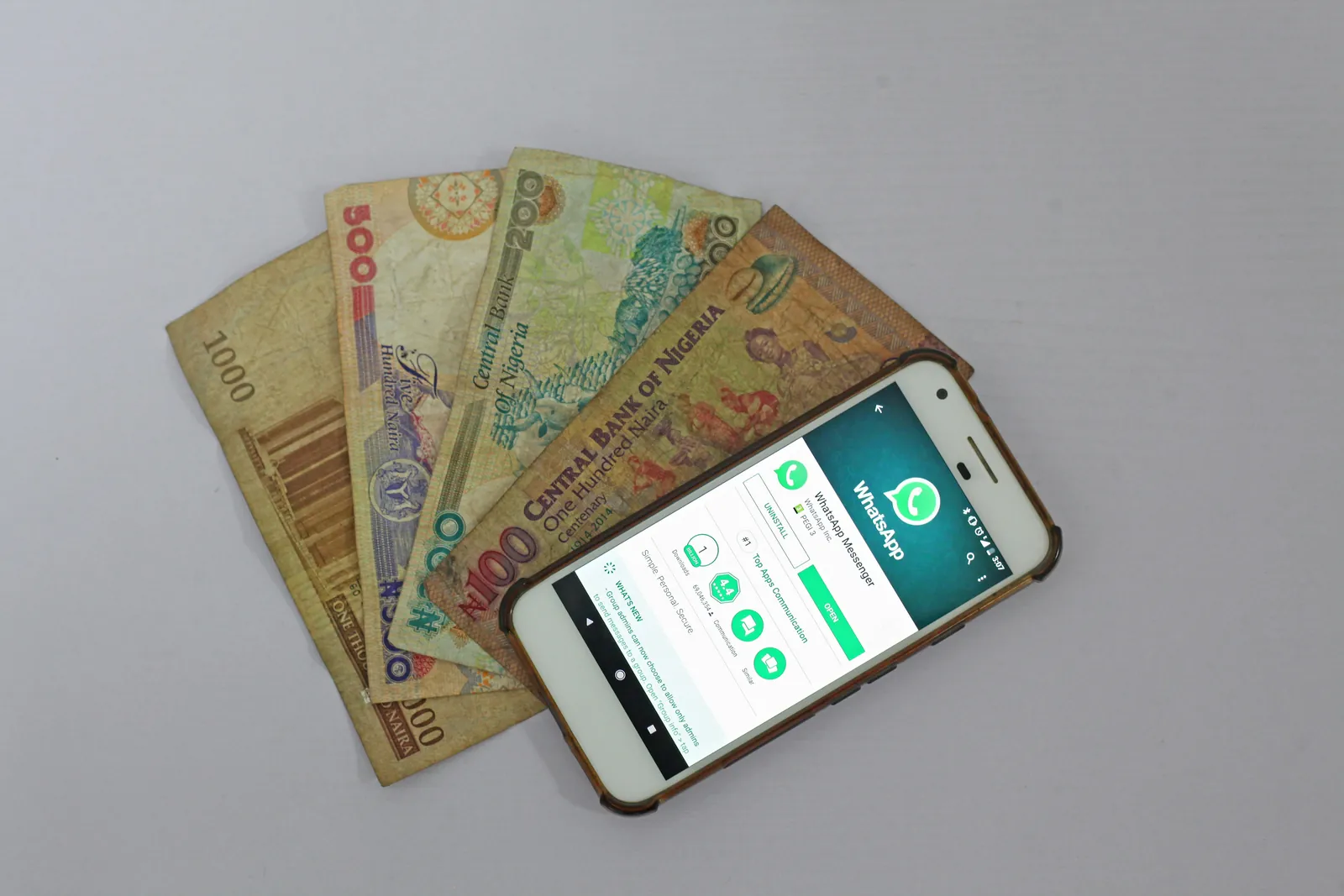
Remittances are one of the largest money flows in the world. In 2025, migrants sent US$728.6 billion to low- and middle-income countries, according to IFAD, the UN’s rural development fund: about 220 million people supporting 1.1 billion relatives. Together, that is about one in six people worldwide.
Sending that money is expensive. The World Bank puts the average cost of sending $200 at 6.36%, more than double the global target of 3%. On $200, that is almost $13 that never reaches the family. The UAE alone sent Dh188.8 billion abroad in 2025, up 27.8% in a year, according to the Central Bank.
What changes with a stablecoin
A stablecoin transfer works like a sandwich. The sender turns cash into a stablecoin on an exchange or app, sends it over a blockchain in minutes, and the receiver turns it back into local money. The middle part is cheap and fast. The two ends are where the cost is.
IMF researchers broke down the average cost of a $200 stablecoin transfer: 0.85 percentage points in exchange trading fees, 0.67 in bank deposit and withdrawal charges, 0.48 for the blockchain transfer itself and 0.18 in spreads, about 2.2% in total. In 33 corridors where they could compare like for like, stablecoins averaged 1.02% against 5.81% for traditional services.
When it is cheaper, and when it is not
Size matters. The same research found the stablecoin route costs about 4.1% on a $50 transfer and about 1.5% on $5,000, because some fees are fixed. The way the money enters and leaves matters too: with the most expensive bank options, the average cost nearly doubles, to about 4.1%.
And it is not always cheaper. In about a third of the comparable corridors, the cheapest traditional provider beat the cheapest stablecoin route. Across corridors, the cost of a $200 stablecoin transfer ranges from −2% to 8%: in some markets local demand for dollars pays the sender a premium, in others it costs extra.
Why it matters for financial inclusion
According to the World Bank’s Global Findex 2025, 1.3 billion adults still have no financial account, yet about 900 million of them own a mobile phone. A stablecoin wallet on a phone can hold and receive digital dollars without a bank branch nearby.
Mobile money already shows the path: in developing economies, 10% of adults used a mobile-money account to save in 2024, twice the share in 2021.
The risks
The IMF is clear about the downside. Nearly 99% of stablecoins are in dollars, so in countries with weak currencies they can speed up dollarisation, help money leave the country around capital controls and drain deposits from local banks. Much of the activity on exchanges and in custodial wallets is also invisible to regulators.
Rules also differ by country. In the UAE, for example, only a licensed dirham stablecoin can be used to pay for goods and services; foreign stablecoins can be used to buy other crypto assets. The guide to stablecoins in the UAE on this site explains the rules.
Borja’s view
Stablecoins for a Better World looks at digital dollars as a tool for people outside the banking system. Remittances are where that idea is tested in numbers. The data says the promise is real in many corridors, but only where the on-ramps and off-ramps are cheap and the rules are clear.
Questions
Are stablecoins cheaper than Western Union or a bank transfer?
Often. IMF researchers found an average cost of 1.02% by stablecoin against 5.81% for traditional services in 33 comparable corridors. But in about a third of them, the cheapest traditional provider was cheaper.
What does it cost to send $200 home?
6.36% on average through traditional services, according to the World Bank. By stablecoin, about 2.2% on average, from −2% to 8% depending on the corridor.
Where does the cost of a stablecoin transfer come from?
Mostly from getting in and out: exchange fees and bank deposit and withdrawal charges. The blockchain transfer itself is about 0.48 percentage points on a $200 transfer.
Can someone without a bank account receive stablecoins?
Yes, with a wallet app on a phone. About 900 million of the 1.3 billion adults without an account own a mobile phone. Turning stablecoins into local cash still needs an exchange, an agent or a local service.
What are the risks?
For the user: fees at the ends, scams and losing access to the wallet. For countries: faster dollarisation, money leaving around capital controls and less visibility for regulators, according to the IMF.
Sources
- IFAD, Sending Money Home 2026, as reported by Pressenza (15 September 2026)
- World Bank, Remittance Prices Worldwide
- IMF, Dan Katz, Stablecoins: Promise, Risks, and Policy Choices for Emerging Markets (7 August 2026)
- Devdiscourse, IMF paper ‘Deconstructing the Stablecoin Sandwich’ (3 November 2026)
- World Bank, Global Findex 2025 press release (16 July 2025)
- Khaleej Times, UAE outward remittances rise to Dh188.8 billion (26 August 2026)
Updated: